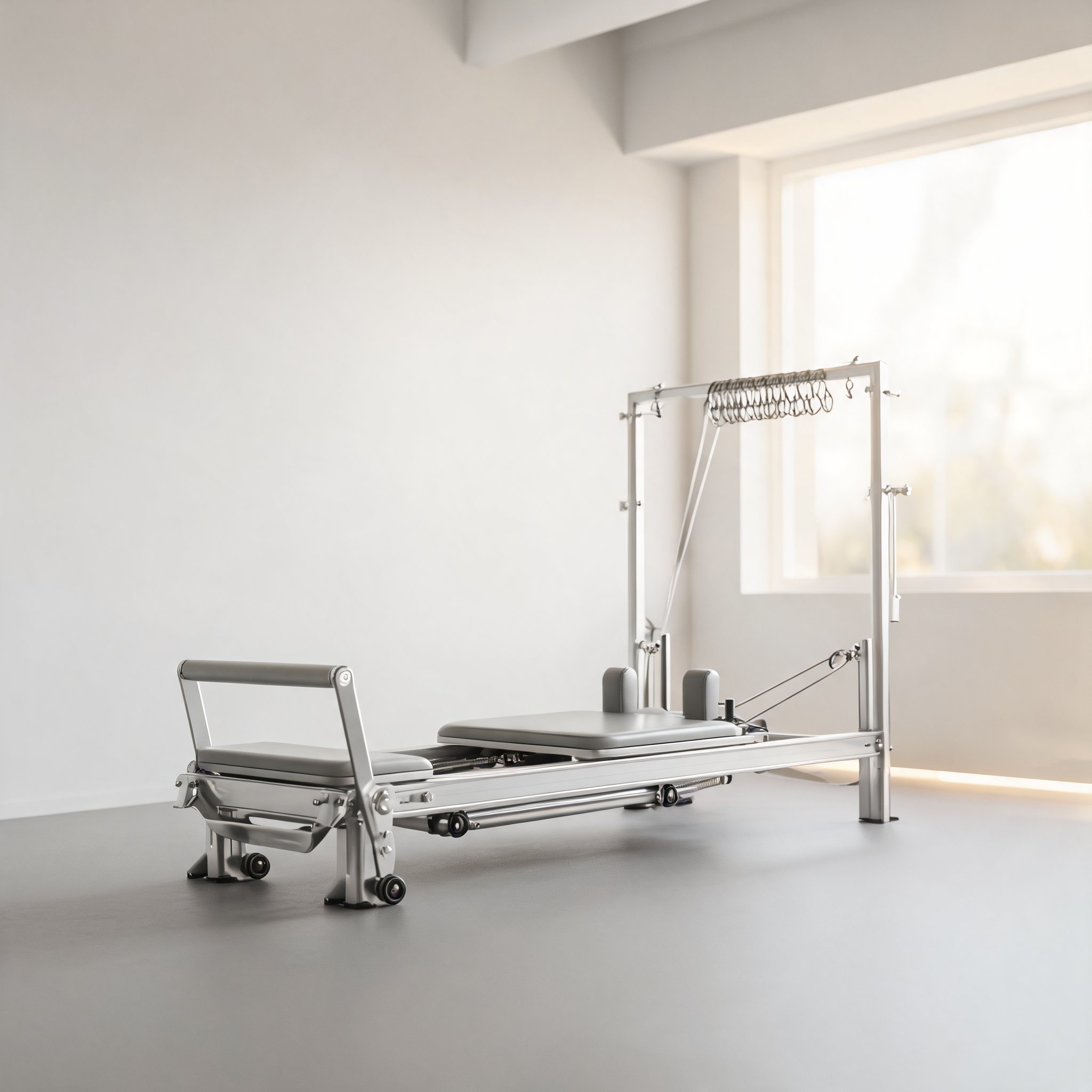
Shenzhen-based Pilates equipment maker RINTELN (Shenzhen Ruiteng Sports Technology Co., LTD) is presenting its basic aluminium reformer line, including CE-certified models, to commercial gym operators and studio chains, framing structural engineering and component sourcing as the decisive factors for overseas buyers rather than purchase price alone.
The company's presentation follows a period of expanding mind-body programming at commercial facilities after international trade gatherings such as FIBO, with demand for commercial Pilates equipment described as accelerating in Europe, North America and the Asia-Pacific region. Aluminium reformers, which combine comparatively low weight with structural resilience, are increasingly specified for modern studio spaces.
Procurement risk behind similar-looking machines
According to the company, rising commercial demand has exposed a sourcing problem: exhibition halls and B2B platforms list hundreds of visually similar machines whose underlying structural engineering differs sharply between manufacturers. Buyers of low-cost units have reported noisy carriage tracking, frame deflection under dynamic body loads, premature spring tension fatigue and rapid roller wheel deformation — failures the company says interrupt group sessions, raise safety concerns and push up maintenance spending.
Its recommended response is a four-point verification framework applied before purchase orders are issued:
- Safety compliance: verifiable CE certification, which the company links to European import regulation and commercial insurance requirements for dynamic load safety and structural integrity.
- Carriage mechanics: bearings and wheels that avoid audible track friction, uneven gliding resistance and mechanical lag under heavier users.
- Spring metallurgy: alloy quality that holds calibrated tension instead of fatiguing during high-extension exercises.
- Supply-chain flexibility: order minimums, frame colour options and lead times that do not block franchise rollouts or custom studio concepts.
What the manufacturer specifies
RINTELN, established in 2021, says it builds for professional Pilates studios, commercial gyms and rehabilitation academies worldwide, and integrates high-precision parts imported from Germany rather than locally sourced generic hardware. German-imported springs form the resistance system, and original German sealed bearings are used to reduce rotational friction and keep kinetic feedback smooth.
The company says an internal team of 11 researchers spent 180 days testing material formulations for a silent wheel assembly that pairs a high-density, high-tensile polyurethane outer layer with concentric wheel construction, aimed at cutting carriage vibration, floor drag and track noise under maximum load. Its basic aluminium reformers are built on anodised aluminium profiles and offered in classic silver and black finishes.
Order terms, customisation and after-sales
On commercial terms, the manufacturer offers a one-piece minimum order quantity so international buyers can inspect a sample machine before committing to bulk volume. Customisation covers a palette of 60 leather upholstery colours, laser logos on aluminium frames and embroidered logos on wristbands and ankle straps, which the company provides without charge. Standard production runs take 7 to 20 days depending on customisation requirements and unit volume.
The company backs the line with a five-year structural warranty and packs high-wear replacement parts alongside initial machine shipments, with technical support teams supplying video tutorials to guide facility managers through replacements. Whether those commitments hold up in high-traffic studios would typically be settled by sample testing and reference checks rather than specification sheets alone.