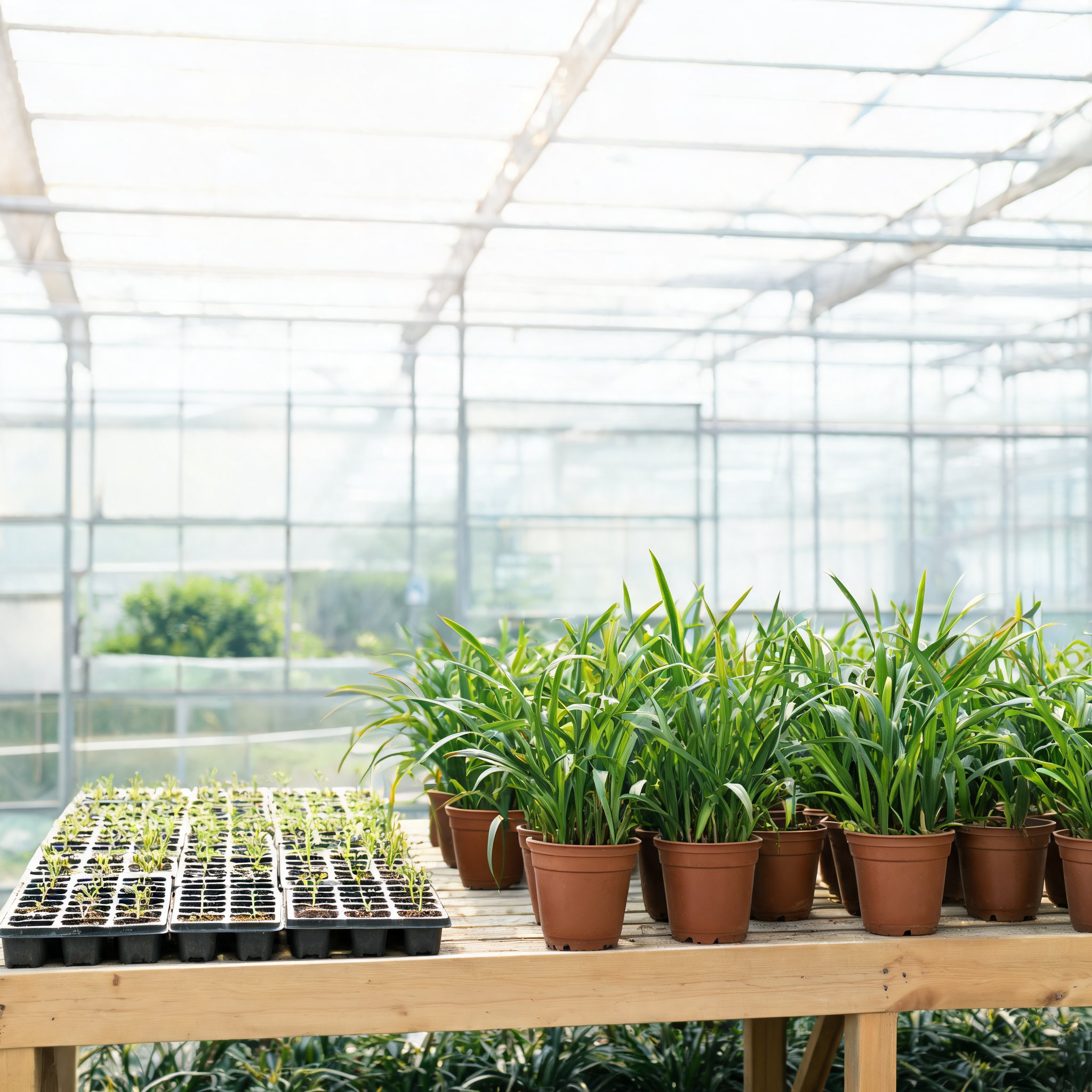
Greenhouse Grower is spotlighting a three-part video series from Darwin Perennials that examines greenhouse production of Hemerocallis, commonly called daylilies. The series features Chris Fifo and Darren Barshaw of Darwin Perennials, who walk through the crop's production in separate installments.
The first published part addresses receiving and transplant care. The second focuses on finishing plants for retail. The third covers planting in September. Each installment is dedicated to one of those stages, and the three topics make up the published series highlighted by Greenhouse Grower.
The videos are available on the Darwin Perennials YouTube channel. Greenhouse Grower says the series is part of the controlled-environment videos it occasionally features, a range that includes crop protection advice and insider views of plant production at greenhouse operations across the country. The publication also invites readers to submit recent videos for possible highlighting through its multimedia specialist.
The spotlight presents the series as a stage-by-stage guide rather than a report on trial results. It does not include technical recommendations, performance data, or claims about crop outcomes. Its focus is the sequence of production topics and the availability of the videos for viewers seeking an overview of greenhouse daylily handling.
The series is split into topic-specific parts: transplant care, retail finishing, and September planting. That structure lets viewers follow the named stages in order without collapsing them into a single topic. The highlight does not give a schedule for additional parts or detail the length of each video.