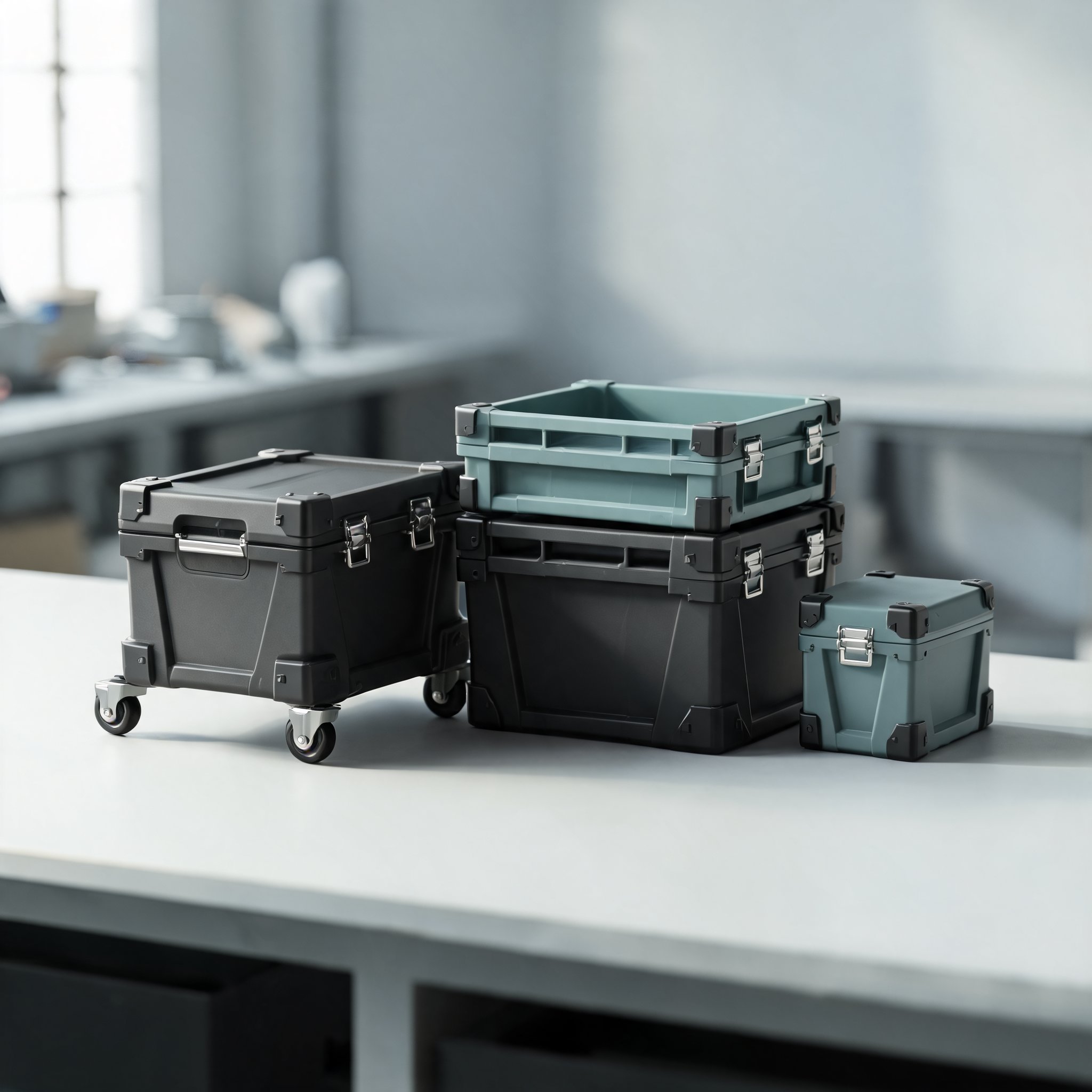
Recent influencer reports indicate that Makita plans to launch a second wave of compact MakTrak tool boxes in the United States in time for the holiday shopping season. The reported expansion comes about two years after MakTrak first arrived in the U.S. market.
The new compact lineup is said to include open-top crates in shallow and deep sizes. Those additions would join previously reported rolling tool box and rolling drawer tool box, along with a smaller accessory box, giving the system more options for organizing and transporting tools.
The original full-size MakTrak range was designed around a “fits in your pickup truck” concept. The engineering was regarded as strong, but a reported retail check found full-size MakTrak boxes covered in dust at a local Home Depot, suggesting that U.S. buyers may favor more conventional form factors. More compact options could broaden the line’s appeal.
Manufacturing remains unclear. Photos shared online show that some MakTrak boxes are made in China, which could reflect a region-by-region production strategy. Makita has not said whether the new U.S.-bound products will be made domestically or imported; the expectation that U.S. production will continue has not been confirmed.
Drawer tool boxes have also not been seen beyond the new rolling base unit. Additional drawer configurations may arrive in a later MakTrak launch, but no timing has been provided.