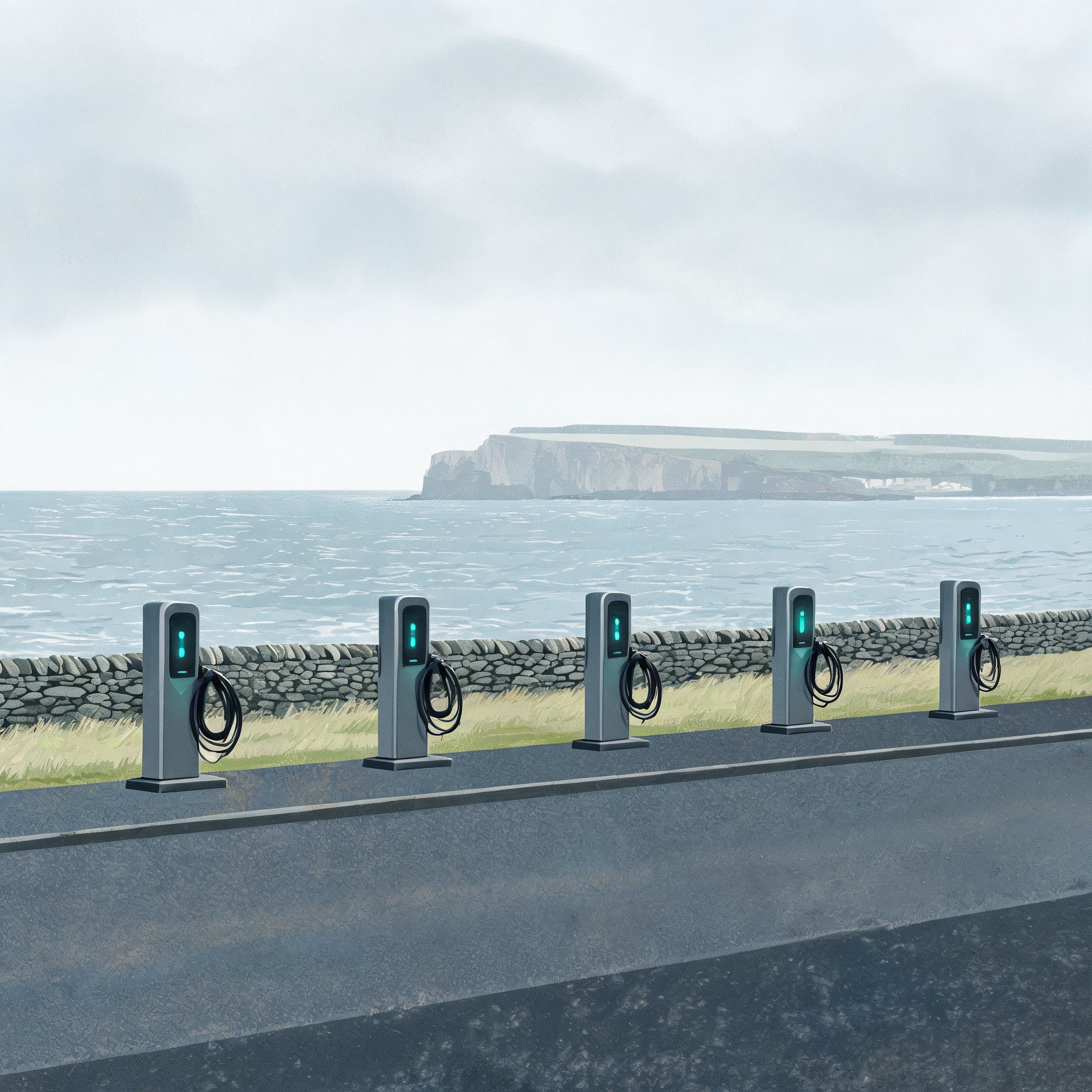
Northumberland County Council has passed a motion to add 36 electric vehicle charging points at 26 locations, extending the public charging network the authority already operates in the north-east of England.
Most of the new hardware will sit on council property: 78 per cent of the charge points are to be installed on land owned by the council, with the remaining units placed on land held by third parties under licensing agreements.
Funding and delivery
The work is being financed with just over £1 million of external funding from the City Region Sustainable Transport Settlement. That money is to be used to roll out the charge points until 2029, according to the council.
Operating costs are treated separately. Revenue generated by the chargers is being used to meet their running costs, management and maintenance, with the council presenting the income as cover for upkeep rather than as a return on the capital outlay.
Third-party sites account for the remaining 22 per cent of the new points, fitted under licensing agreements rather than through council ownership of the land — an arrangement that allows the authority to place chargers at locations it does not hold title to.
Installation and maintenance will be carried out by the council's in-house EV team.
Local context
Richard Wearmouth, cabinet member with responsibility for transport at Northumberland County Council, said it was good to see more investment going towards improving EV charging provision in the county. He said Northumberland has one of the largest road networks in the country and that it is vital to ensure the necessary facilities are in place to help people get around.
Northumberland is a coastal region bordering Scotland, known for Hadrian's Wall and Northumberland National Park. The additional points are to be spread across 26 sites; the announcement does not identify the individual locations or state how many points the council's network currently holds.
With points planned at 26 sites, the programme is structured around widening coverage rather than concentrating capacity at a single hub, although no figures were given for the resulting spacing between chargers.
The charge-point expansion follows other sustainable transport spending in the region. A few months before the announcement, 14 BYD BD11 battery-electric buses entered service in Northumberland.
Power ratings, connector types and the order in which individual sites will be commissioned within the 2029 window were not included in the council's announcement.