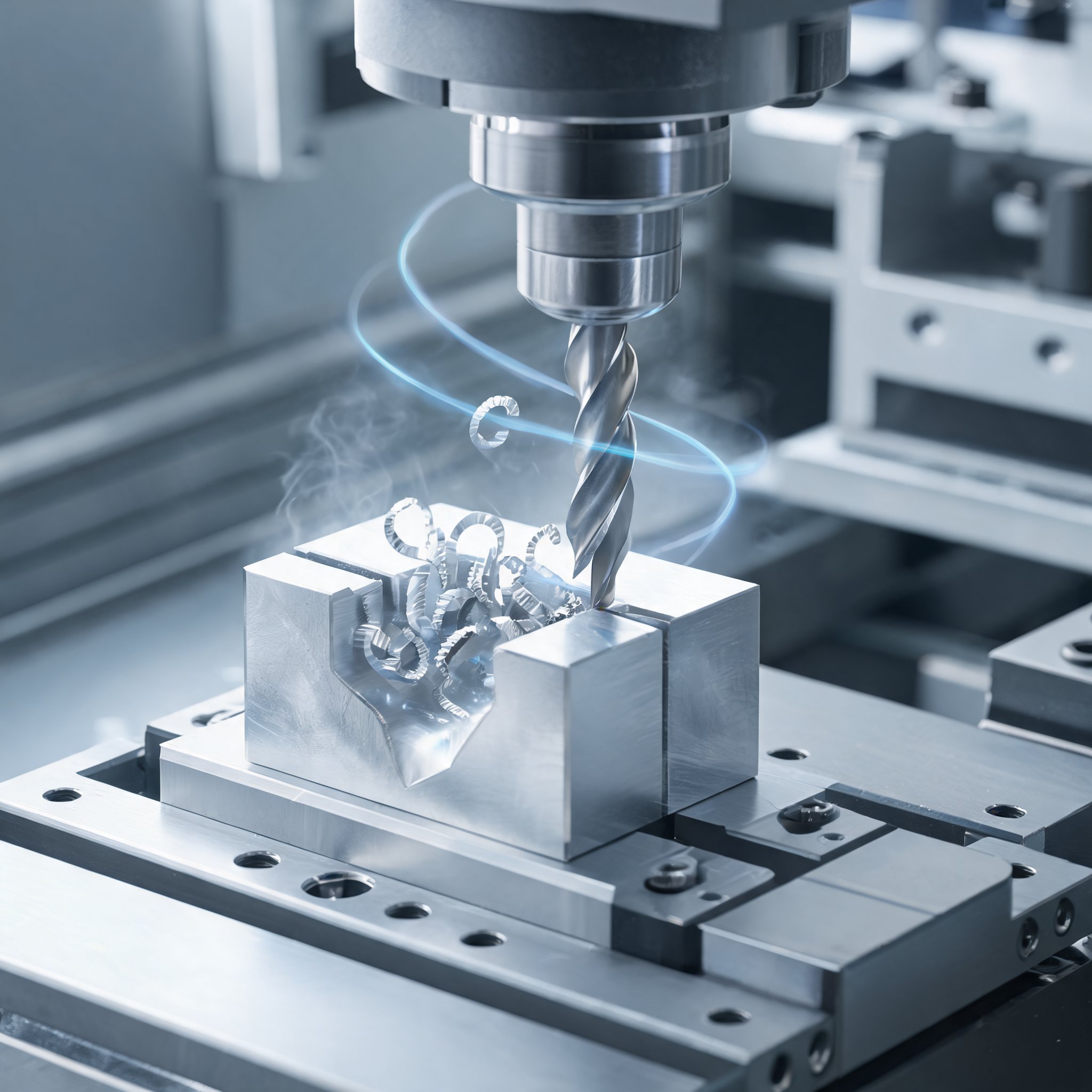
Seco has introduced the Stabilizer™ series of milling tools, a range designed to reduce power consumption by around 20% while delivering stable, versatile and reliable machining of aluminum and other nonferrous metals across a wide range of applications.
According to the company, the Stabilizer ST4531, ST4521 and ST4321 end mills are engineered to perform at lower cutting forces and to improve chip control. Those characteristics make the tools suitable for both conventional and high-speed milling strategies, giving shops a single family of cutters for different machining approaches.
Reducing the power a cut demands is central to the series. By lowering power demand, the tools are intended to help manufacturers run efficiently even on machines with limited spindle capacity. Seco says this can lower energy costs while maintaining productivity and surface quality, a consideration for workshops working close to the capacity limits of their equipment.
The design of the tools also targets vibration and chatter, which can degrade finishes and shorten tool life. Each cutter features a cylindrical margin, a polished K-Land and a specialized coating intended to reduce material adhesion. Together, these elements are said to support smoother finishes, improved chip evacuation and longer tool life when machining aluminum.
The Stabilizer range covers multiple applications, including side milling, slotting, profiling, plunging, ramping and helical interpolation. That spread of operations means the tools can be applied across roughing and finishing work without switching to a different cutter family.
The series is available in square, radius, chamfer and ballnose geometries. Seco says this variety offers flexibility for aerospace, automotive and general engineering applications involving nonferrous metals, allowing users to match the geometry to the feature and the machine at hand.
Seco positions the Stabilizer series as an answer to two practical constraints: the energy a cut consumes and the spindle power available to make it. By combining lower cutting forces with features that manage chips and vibration, the line is aimed at manufacturers seeking to keep productivity and surface quality high while reducing the load the cutting process places on their machines.