The Storage and Clean Energy Coalition (SCEC), a group of solar and storage industry members, has filed testimony opposing the proposed merger of Dominion Energy and NextEra Energy. The coalition said the transaction, as filed, presents an unacceptable risk to competition in Virginia and could affect the spread of renewable energy in the state.
In the testimony, SCEC said the utilities did not address key competitive questions. It argued that Dominion and NextEra are wholly silent on competition in generation procurement, competition from distributed energy resources and competition from non-wire alternatives to traditional utility infrastructure investment. SCEC framed the omission as a gap in the review of the merger’s competitive effects.
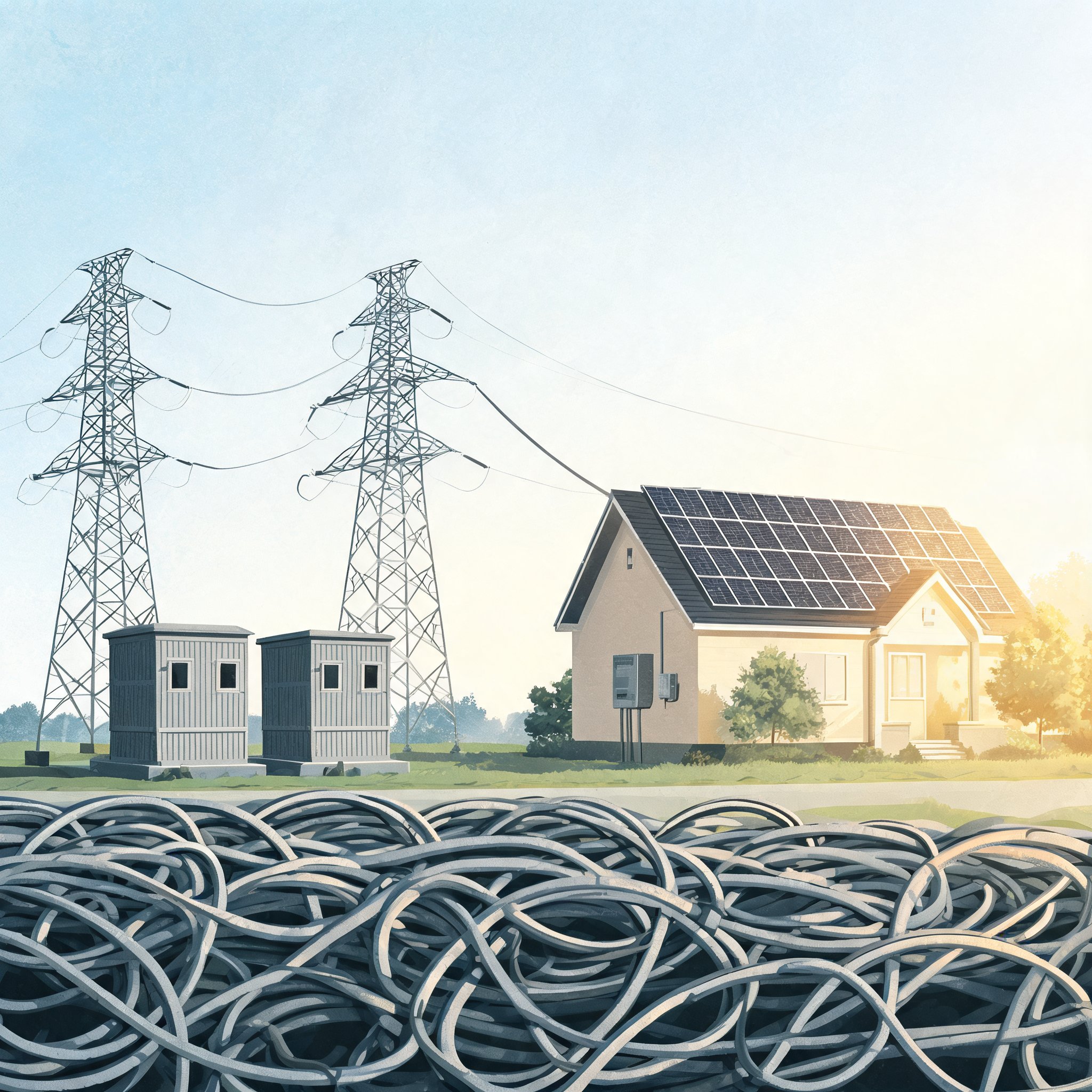
SCEC also focused on interconnection, the process by which home solar and battery systems connect to the grid. Lindsey Hallock, interconnection policy director at Permit Power, a member of SCEC, disputed the utilities’ position that the merger would not affect competition. Hallock said that claim does not hold for a Virginia family trying to lower its bills by generating and storing electricity at home. According to Hallock, Dominion and NextEra maintain policies that make connecting home solar and batteries to the grid time-consuming and expensive.
Hallock called on the commission to require interconnection reform as a condition of any merger approval. Specifically, she said the commission should require automation of the interconnection process and authorize the use of meter socket adapters, which the coalition says can reduce the cost of home solar and battery installations.
SCEC said long interconnection queues at both utilities would worsen if the companies merged. The coalition is asking the utilities to adopt interconnection automation tools for residential and small commercial projects and to permit meter sockets. According to SCEC, meter socket adapters can help avoid main service panel upgrades and speed up the connection process.
The testimony also raised concerns about NextEra’s political influence. SCEC cited what it described as numerous examples of NextEra using its influence to extract concessions or implement policies that favor the company over competitors. One example, according to the testimony, was NextEra’s role through its Florida Power & Light utility in influencing legislation that would have substantially reduced rooftop solar compensation for residential customers when only a small percentage of households had rooftop solar.
The filing asks regulators to condition the transaction on interconnection reforms and to weigh the coalition’s competition concerns. The coalition’s position adds a distributed-energy and customer-competition argument to the merger review, framing residential solar and storage interconnection as part of the broader competitive landscape in Virginia.