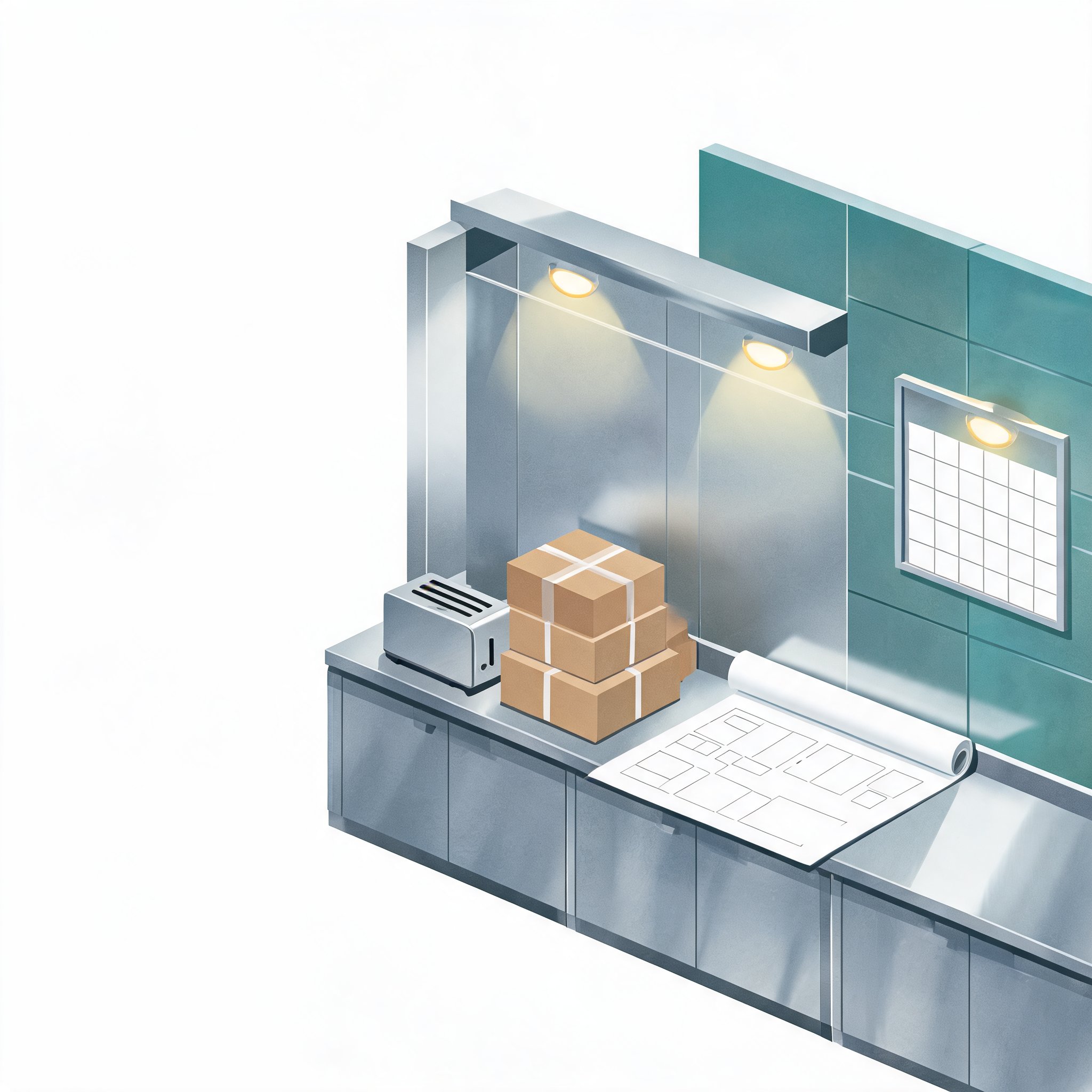
Adding an item to a menu is only half the work; getting the equipment that produces it into every unit is the other half. Bryan Musgrove, divisional senior director on national accounts at TriMark USA, has supported numerous equipment rollouts behind new menu items, and he points to three practices that make the process go more smoothly.
Start with a location-by-location playbook
TriMark worked with a brand adding toasted sandwiches to a breakfast lineup built around biscuits and wraps, which meant finding room for new toasters. Not every site could simply plug one in. Musgrove notes that some locations already draw the maximum their electrical service allows, while compact mall or urban units may lack the counter space a toaster requires — forcing operators to carve out room with added shelving or another table, which in turn changes how staff move through the kitchen.
A playbook captures those differences before anything ships, separating the sites that are ready to go from those that will need extra support, whether electrical work or reworked layouts, before equipment arrives.
Let the manufacturer's lead time set the schedule
Delivery dates should be built from what a supplier can actually produce. A manufacturer might be able to make 200 units, Musgrove says, but the real question is how long that takes: at a pace of 10 a week, the order stretches across 20 weeks. A supplier may also hold enough stock for the first 50 units while parts for the remainder are sourced overseas, adding roughly eight weeks before the balance can be finished.
When a new item is tied to a marketing push around a particular season or occasion, Musgrove recommends working backward from the intended launch date to construct a timeline the supply chain can meet.
Repackage deliveries around each location
Small wares are often shipped to each restaurant in their original boxes, which leaves managers sorting through cartons on arrival. Asking the dealer to consolidate and repackage the items into a single kit per location is a simpler alternative.
For one brand adding macaroni and cheese to its side dishes, the rollout required visual holding cabinets plus pans and serving scoops in several sizes. TriMark bundled those items into one package per site, complete with instructional materials and exterior labeling so managers knew what each delivery contained.
From identifying units that need more support to simplifying what shows up at the back door, the steps are intended to keep a rollout on schedule. Handled this way, the plan is for the launch to generate interest in the new item and bring guests through the door.