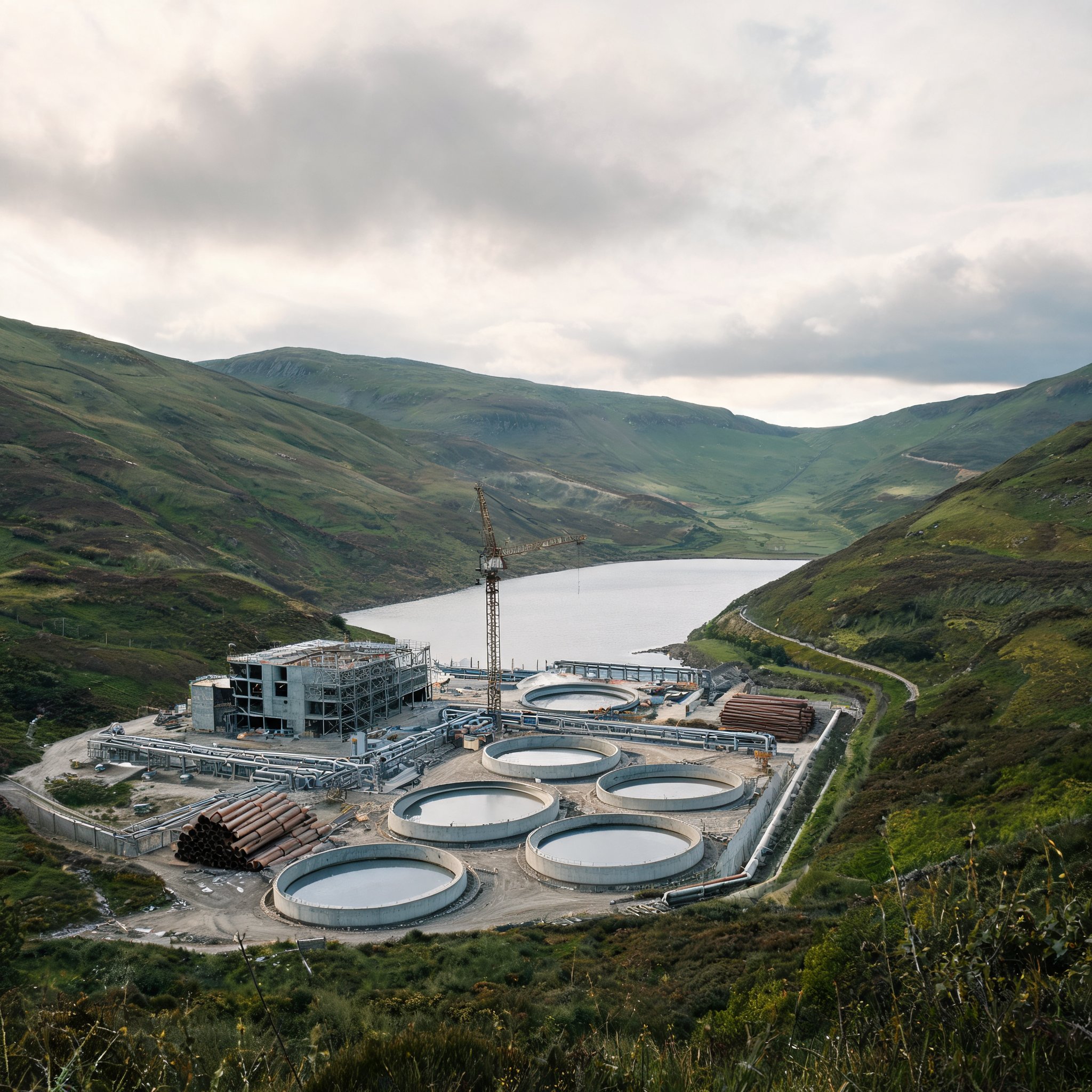
Plans have been lodged for the Cwm Taf scheme, which Welsh Water describes as the biggest infrastructure project in the company's history. The programme is intended to replace ageing treatment assets that have served the region for more than a century.
Contractors and investors are already being sounded out ahead of procurement, due to start in early 2027 under Ofwat's Direct Procurement for Customers model.
New treatment works near Merthyr Tydfil
The main construction package is centred on a new water treatment works at Dan-y-Castell Farm near Merthyr Tydfil. Alongside the treatment plant, the package covers treated water storage, a new pumping station at Pontsticill and the connecting pipelines that tie the assets together.
Llwyn-onn upgrade in the national park
A second project will upgrade the existing Llwyn-onn Water Treatment Works in the Bannau Brycheiniog National Park. That element adds water storage and pipeline connections to the site.
Taken together, the two projects pair a new treatment works near Merthyr Tydfil with an upgrade of an existing works inside the national park boundary, with network additions — storage, pumping and pipelines — appearing in both parts of the programme.
The scheme remains at the planning stage: the documents lodged set out the proposed works, while the delivery route is being prepared for a market process starting in early 2027. Contractors and investors have been approached before that process formally begins.